
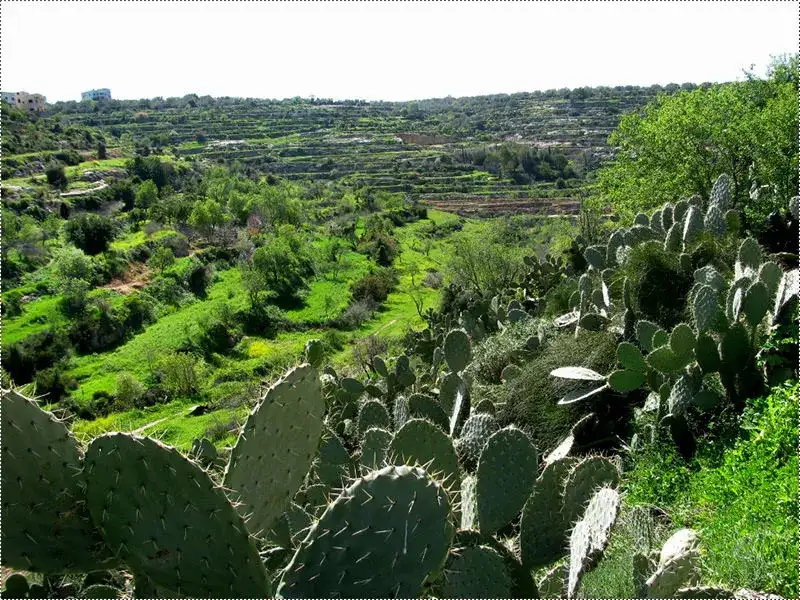
Restoring the Ancient Terraces of Salfit
Some of the stone terraces on the hills around Salfit are over five hundred years old — walls people built by hand to turn steep hillsides into land you could actually grow something on. They've always done two jobs at once: growing our olives and grapes, and holding the soil in place so winter rain doesn't just wash it down into the valley. Lately though, a lot of these walls have started coming apart. Age, land that's gotten harder to reach, and not enough people left who know how to do the yearly upkeep this kind of building actually needs.
This year we started fixing up a good stretch of collapsed wall on land our members farm. It's done the old way — no cement, nothing modern, just dry stone, often the same stones the original builders used, wedged in by hand so water can move through the wall instead of pushing against it. It's slow. A good team might manage fifteen meters in a day if things go well. But it's the only way that's actually held up here for five hundred years, so we're not looking for a shortcut.
It's already making a difference beyond just looking better. The parts we've finished are holding onto rain much better, and a few of our farmers say the soil behind the restored walls stays damp noticeably longer into summer, which matters more every year as the rain gets less predictable. More bugs and birds are showing up too, which, say what you want, is usually a good sign.
Maybe the best part is that six young people from cooperative families spent this season learning the actual craft from two of the last master builders left who still know it properly. Nobody was left to teach it before this. We're hoping to start on another stretch of wall next spring, and this time the crew that just trained will be doing most of the leading.